


Beyond 18 Meters: Why Advanced Open Water is the Key to Unlocking Hurghada’s Best Dives
Earning your Open Water Diver certification is an unforgettable milestone. That first moment you take a breath underwater and realize you can hover effortlessly among schools of fish is pure magic. But as any experienced diver will tell you, the basic certification is essentially your passport to the shallows. It caps your depth at 18 meters (60 feet)—a beautiful world, but one that represents only a fraction of what the ocean has to offer.
When you are diving in Egypt, particularly around the high-action hub of Hurghada, that 18-meter line is a significant boundary.
Hurghada’s underwater topography is dramatic. It is defined by sheer vertical walls that plunge into the deep blue, historic shipwrecks resting on the seafloor, and offshore pinnacles where the best marine life action requires a bit more depth and skill. Upgrading to your Advanced Open Water certification isn’t about becoming a “hardcore” or technical diver; it’s about gaining the practical skills, confidence, and legal clearance to unlock the absolute best sites the Red Sea has to offer.
Here is exactly what you miss out on with just a basic license, and why Hurghada is the perfect classroom to take the next step.
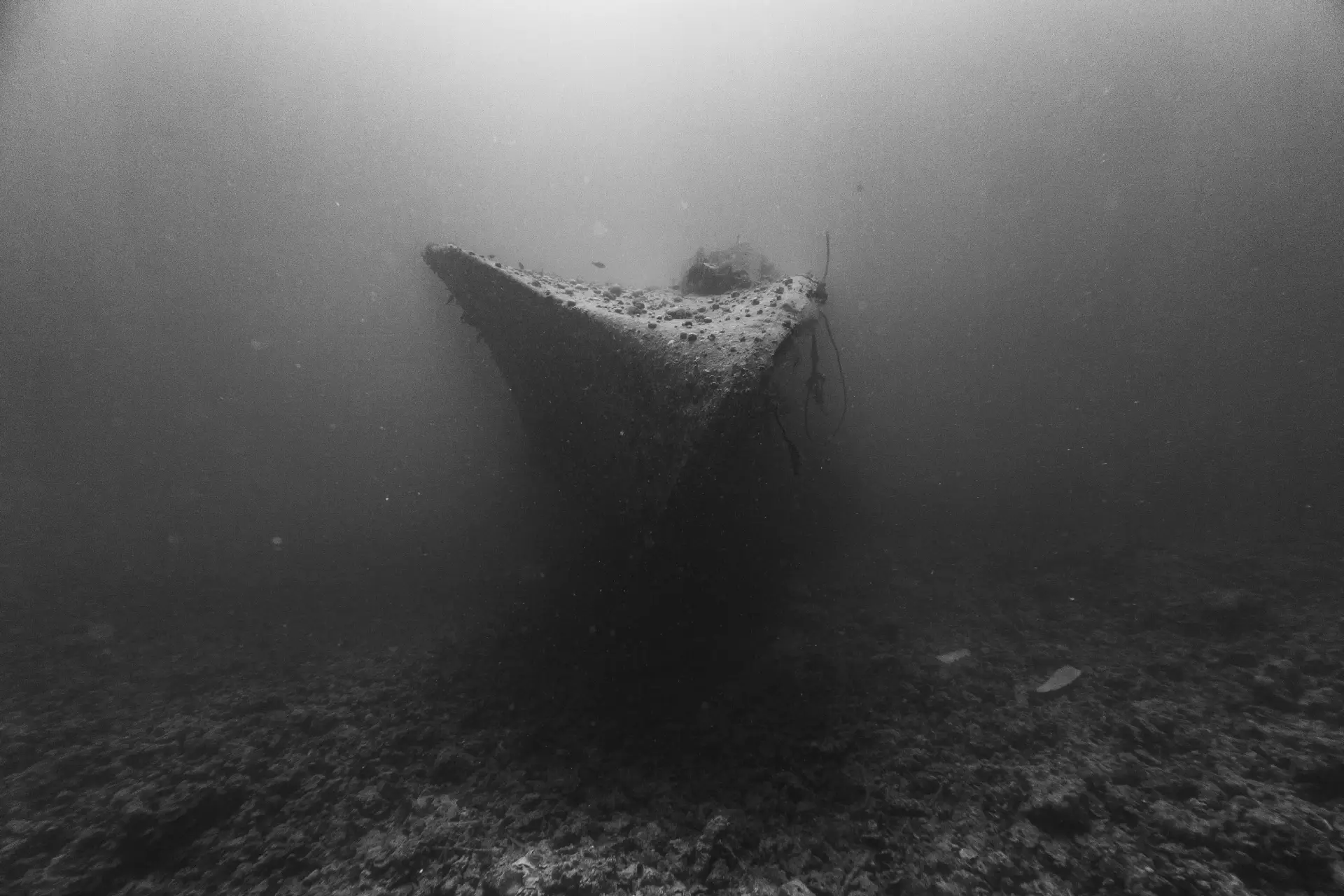 1. The Wrecks Belong to the Deep
Hurghada and the surrounding northern Red Sea form an international epicenter for wreck diving. But ships don’t always choose to sink in shallow water.
Take the El Mina, an Egyptian minesweeper sunk by Israeli aircraft in 1970, which lies just outside Hurghada’s main harbor. The wreck rests on its starboard side on a sandy bottom at 30 meters deep. If you only hold a basic Open Water certification, you are legally restricted from visiting it.
By taking your Advanced course—which includes a mandatory Deep Dive specialty down to 30 meters (100 feet)—the El Mina, the deeper sections of the ship graveyard at Abu Nuhas, and the legendary SS Thistlegorm suddenly become accessible. You move from looking down at a shadow in the deep to swimming alongside the massive propellers, guns, and histories of these sunken giants.
2. Deep Walls and the Pelagic Patrol
Many of Hurghada’s most vibrant coral formations are found at offshore islands like Small Giftun. These sites are famous for their breathtaking vertical drop-offs. While the top of the reef is a sunlit paradise for beginners, the “big stuff” patrols the deeper sections.
As you descend past 20 meters along a wall, the marine environment changes. The massive gorgonian sea fans grow larger to catch the deeper currents, and this is the exact zone where apex predators hunt. If you want to see grey reef sharks, hunting tuna, giant barracudas, and massive napoleon wrasse, you need to be in that 20-to-30-meter window. The Advanced certification gives you the buoyancy control and depth awareness required to safely cruise these deep-blue drop-offs.
3. Mastering the Drift
A major component of the Advanced Open Water course is learning how to navigate currents. Many of Hurghada’s premier sites are drift dives, where the boat drops you off at one end of a reef and picks you up at the other.
In a drift dive, you don’t fight the ocean; you use it as a conveyor belt. The Drift Diving adventure dive teaches you how to maintain your horizontal trim, signal your buddy in a moving water column, and deploy a Surface Marker Buoy (SMB)—the essential inflatable “sausage” that tells the boat captain exactly where you are surfacing. Mastering this skill transforms what could be a stressful dive into a completely effortless, “Zen-like” flight over the reef.
4. The Magic of the “Night Shift”
The Advanced course requires five adventure dives, and one of the most popular choices in Hurghada is the Night Dive.
When the sun sets over the Egyptian desert, the Red Sea reef undergoes a complete shift in staff. The colorful daytime fish tuck themselves into the coral to sleep, and the nocturnal predators emerge. Armed with a high-powered dive light, you will see the reef come alive in brilliant colors that are normally absorbed by daylight.
Diving in the dark out of Hurghada rewards you with sightings of hunting moray eels swimming freely in the open water, giant basket stars unfolding their fractal arms to feed, and the famous Spanish Dancer nudibranch swimming through the water column like a waving crimson dress. It is an entirely new world on a reef you might have already dived during the day.
Why Hurghada is the Perfect Place to Upgrade
If you are going to take your Advanced course, you want an environment that lets you focus on learning without dealing with harsh conditions. Hurghada offers exactly that:
-
Unmatched Visibility: With horizontal visibility regularly exceeding 25 to 30 meters, you never lose sight of your instructor or your buddy, drastically reducing any anxiety about going deeper.
-
Warm Water: No thick, restrictive 7mm suits or hoods are needed here. In the summer, the water is a balmy 29°C, making your training comfortable and relaxed.
-
World-Class Instructors: Hurghada’s dive industry is highly regulated and features some of the most experienced dive professionals in the world, ensuring your training is safe, thorough, and fun.
Don’t Leave Half the Reef Behind
Staying at the Open Water level is fine if you only want to dive once a year in a shallow lagoon. But if you want to truly experience the scale, the history, and the adrenaline of the Red Sea, the Advanced Open Water certification is your key.
It takes just two days and five incredible dives to upgrade your skills. Don’t leave half the reef—and the best wrecks in Egypt—behind. Upgrade your license, drop past the 18-meter line, and see what the deep blue is really hiding.
