


 The Secret Life of Red Sea Clownfish: 5 Things You (Probably) Didn’t Know
We all know the basics: they live in anemones, they are cute, and they are named Nemo. But if you stop there, you are missing 90% of the story.
The Red Sea Anemonefish (Amphiprion bicinctus) is not just a pretty face; it is a complex, noisy, and surprisingly aggressive little creature with a lifestyle that is stranger than fiction. While most divers swim past with a quick wave, those who stay and watch are treated to a soap opera of dominance, communication, and housekeeping.
At Scubadore Hurghada, we love showing our divers the details others miss. Here are five secrets about our most famous resident that will change the way you look at them forever.
1. They Are the Noisiest Neighbors on the Reef
You might think fish are silent, but hold your breath and listen closely next time you approach an anemone. Clownfish are chatterboxes.
They communicate using a complex language of “pops” and “chirps” created by gnashing their teeth and vibrating their jaws.
-
The Pop: A low-frequency aggressive sound used to warn intruders (like you!) or assert dominance over subordinates.
-
The Chirp: A submissive sound made by smaller male fish to say, “Don’t hurt me, I know you’re the boss!” to the dominant female. Next time you are close, listen. You might just hear them yelling at you to get off their lawn.
2. They Aren’t Actually “Nemo” (And That’s a Good Thing)
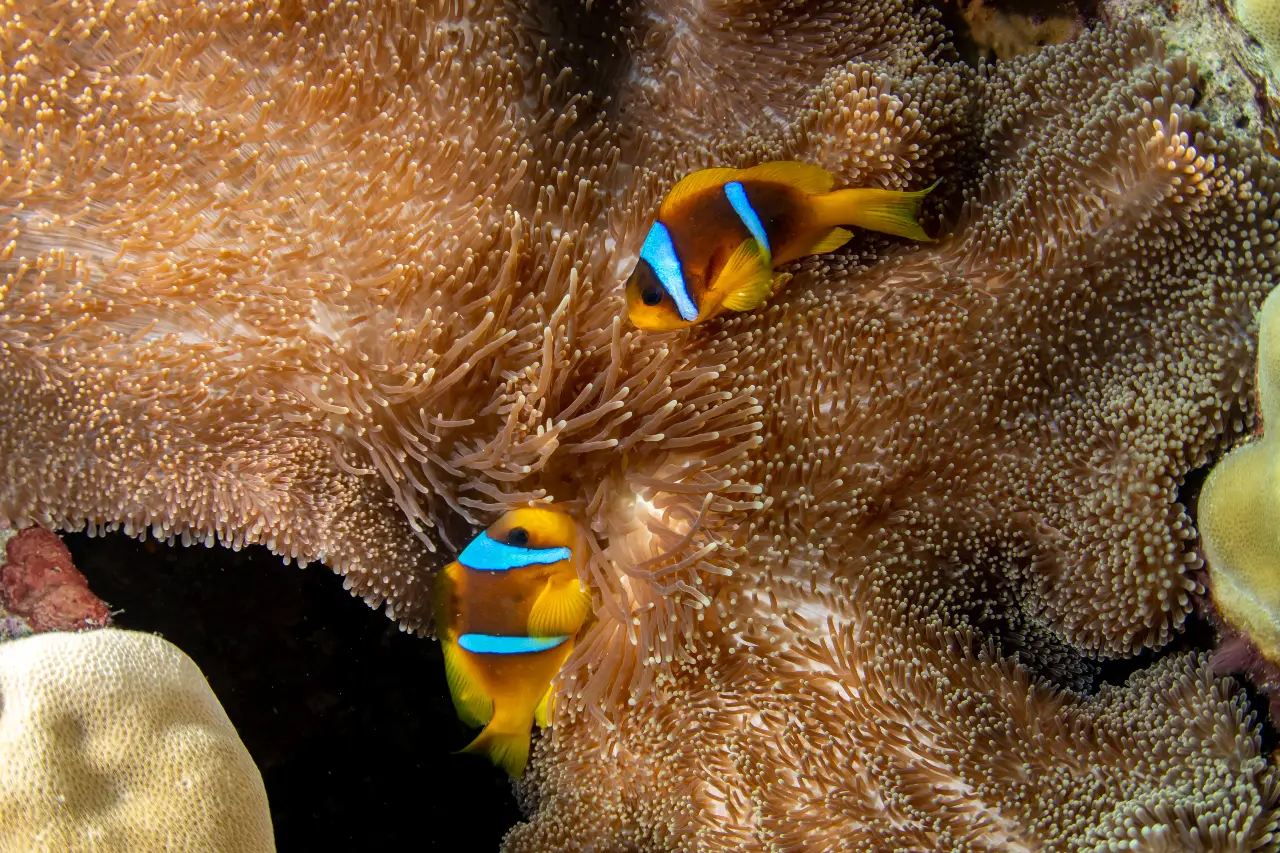
We hate to be the ones to break it to you, but the fish in the movie (the Ocellaris Clownfish) doesn’t live in the Red Sea. Our local hero is the Two-Banded Anemonefish.
Look closely at our local species. Instead of the three white stripes of the movie star, ours has two distinct white bands (one on the head, one on the body) and, uniquely, a bright yellow tail. Why is this cool? Because this specific species is endemic to the Red Sea and parts of the Indian Ocean. You didn’t fly all the way to Egypt to see a movie character; you came to see a unique species you can’t find in the Caribbean or the Pacific.
3. They Are “farming” Their Home
The relationship isn’t just about protection; it’s about agriculture. Recent science suggests that clownfish are actively farming their anemones.
It was long thought that the anemone just ate the clownfish’s accidental table scraps. But observations show that clownfish will actively find food, carry it back, and forcefully spit it into the anemone’s mouth. They also wiggle their bodies deep into the tentacles at night. This isn’t just for snuggling; they are vibrating to increase water circulation and oxygenation for the anemone, ensuring their fortress stays healthy and strong.
4. The “Shimmy” Dance of Immunity
Clownfish aren’t born immune to the anemone’s sting. If a clownfish is removed from its host for just a few days, it loses its protection.
To return home, they have to perform a painful-looking acclimation dance. You can sometimes see a clownfish cautiously touching the tentacles with its belly or fins, getting stung slightly, then pulling back. It does this over and over for hours. This builds up a mucus coating that mimics the anemone’s own chemistry. Essentially, they are stealing the anemone’s password so the security system doesn’t fire.
5. They Are Fearless (and a Little Crazy)
Despite being only a few inches long, the Red Sea Clownfish has the heart of a lion—and zero concept of size.
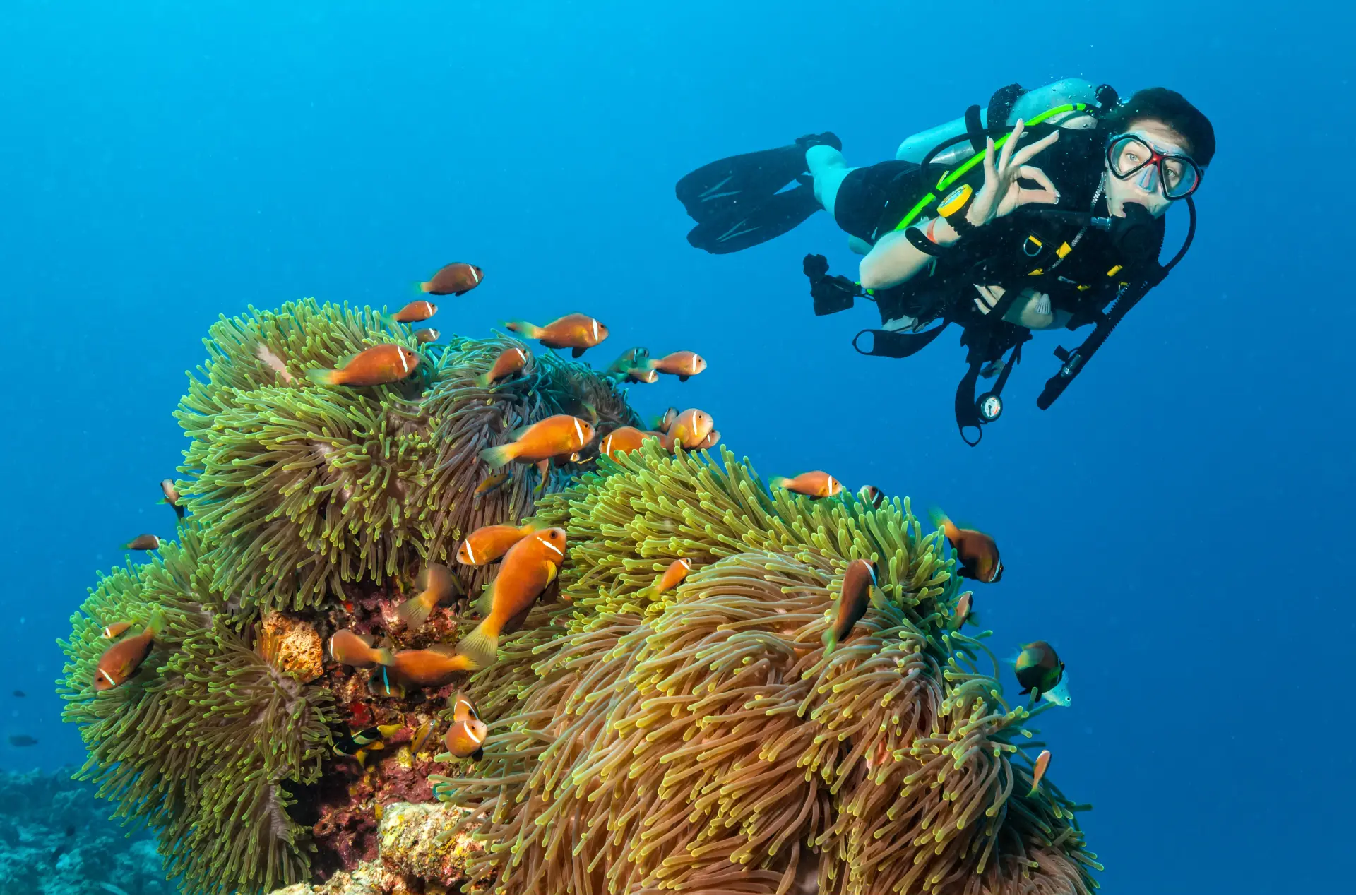
While other fish hide from divers, the female clownfish will often swim out of the anemone to confront you. We have seen 10-centimeter fish charge head-first at the mask of a 1.8-meter diver. They will bite your fins, nip at your camera dome, and fiercely stand their ground. It’s hilarious, brave, and the absolute best photo opportunity on the reef—if you can stop laughing long enough to take the shot.
See The Real Story with Scubadore
The next time you’re diving in Hurghada, don’t just take the “Nemo” picture and move on.
Stop. Listen for the pops. Watch the female bossing the males around. Look for the yellow tail that marks our unique Red Sea species. When you dive with Scubadore, we give you the time and the knowledge to see the reef not just as a picture, but as a living, breathing, and fascinating world.
%20Didn’t%20Know)